
8 Giants Above the Clouds: Every 8,000-Meter Mountain in Nepal You Should Know
Nepal is home to the highest mountains on Earth. Out of the 14 peaks in the world that rise above 8,000 meters, eight of them lie fully or partially in Nepal. These mountains are not just tall; they shape culture, history, trekking routes, and the dreams of adventurers from every corner of the world.
Whether you’re a trekker, climber, or someone who simply loves the Himalaya, knowing these giants gives deeper meaning to every trail you walk in Nepal. While these mountains may seem intimidating, many routes beneath them are ideal for first-time visitors, and our guide to trekking in Nepal for beginners explains how to prepare and trek safely.
Let’s explore all eight 8,000-meter peaks of Nepal, where they are, and why they matter.
1. Mount Everest (8,848.86 m) – The Highest Point on Earth
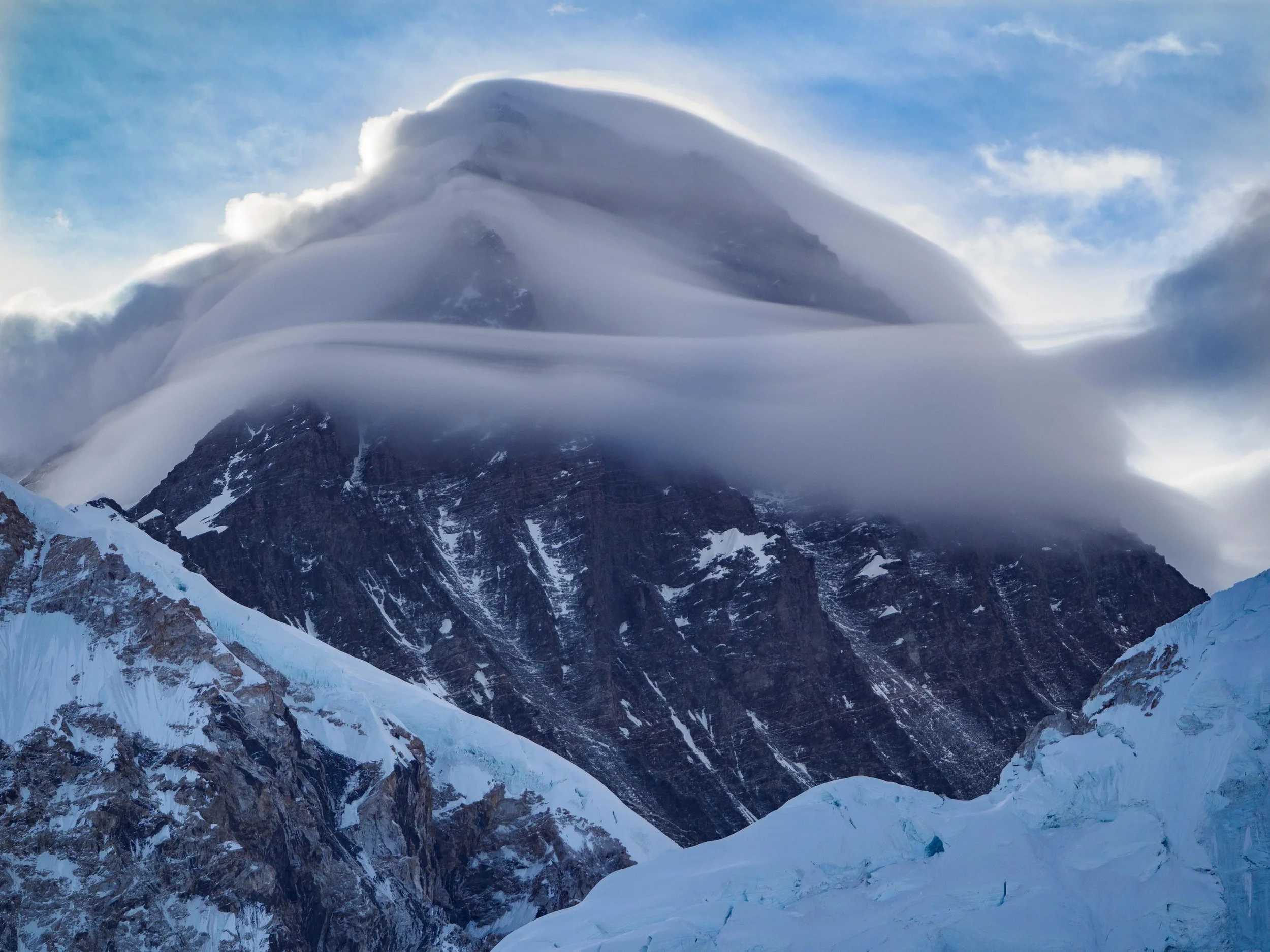
Everest summit covered under a blanket of clouds.
Location: Khumbu region, Nepal–Tibet border
Mount Everest, known as Sagarmatha in Nepali and Chomolungma in Tibetan, needs no introduction. Standing as the tallest mountain on the planet, Everest has drawn explorers since the early 20th century.
You don’t need to be a climber to experience Everest. The Everest Base Camp Trek offers one of the most iconic walking journeys in the world, passing through Sherpa villages, monasteries, and dramatic glacial valleys.
Why it’s special:
Highest mountain on Earth
Rich Sherpa culture
World-class trekking routes
2. Kangchenjunga (8,586 m) – The Remote Giant
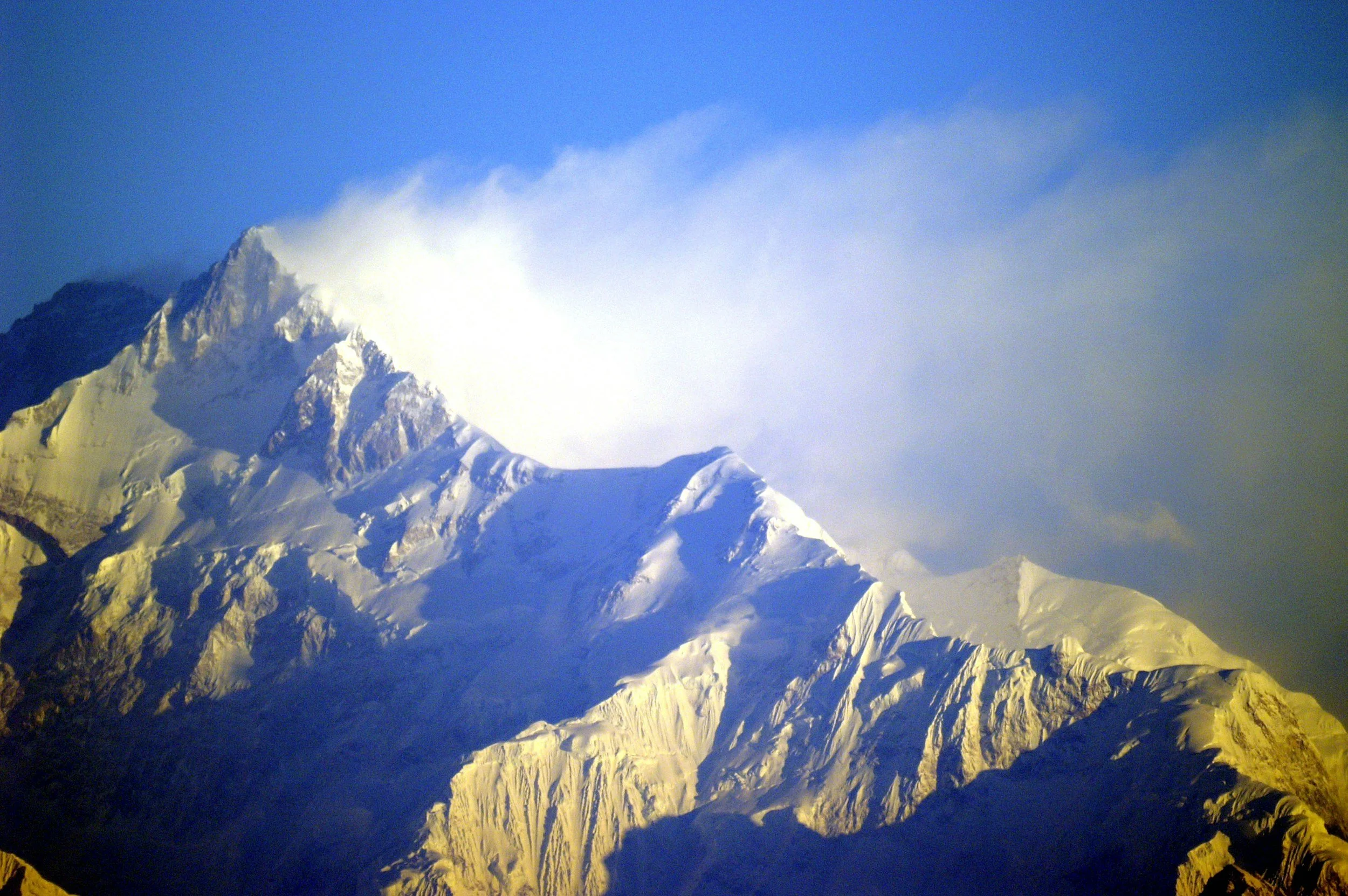
Kanchanjunga 8,586 m
Location: Eastern Nepal–India border
Kangchenjunga is the third highest mountain in the world and one of the least visited 8,000-meter peaks in Nepal. Sacred to local communities, its summit is traditionally left unclimbed out of respect.
The Kangchenjunga Base Camp Trek is raw, remote, and perfect for trekkers who want solitude and untouched landscapes.
Why it’s special:
Less crowded than other regions
Deep cultural traditions
Wild and remote terrain
3. Lhotse (8,516 m) – Everest’s Closest Neighbor
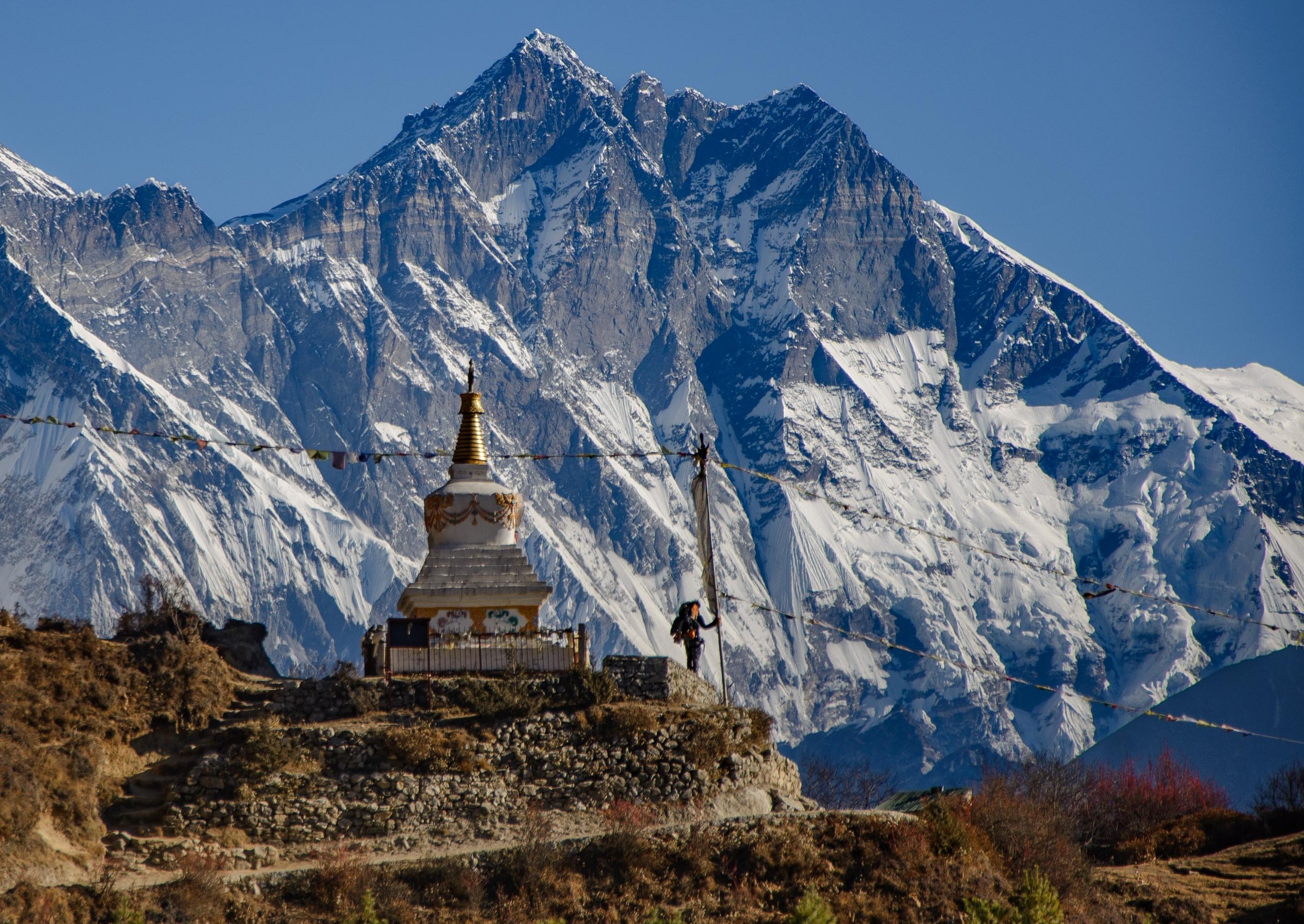
Lhotse seen on the way to Gokyo lake trek in Everest Region.
Location: Khumbu region, Nepal–Tibet border
Lhotse rises just south of Mount Everest and shares much of the same approach route. Despite its proximity, Lhotse is a formidable mountain in its own right, known for its steep and technical south face.
Trekkers see Lhotse clearly while hiking toward Everest Base Camp.
Why it’s special:
Dramatic south face
Part of the Everest massif
Dominates the Khumbu skyline
4. Makalu (8,485 m) – The Perfect Pyramid
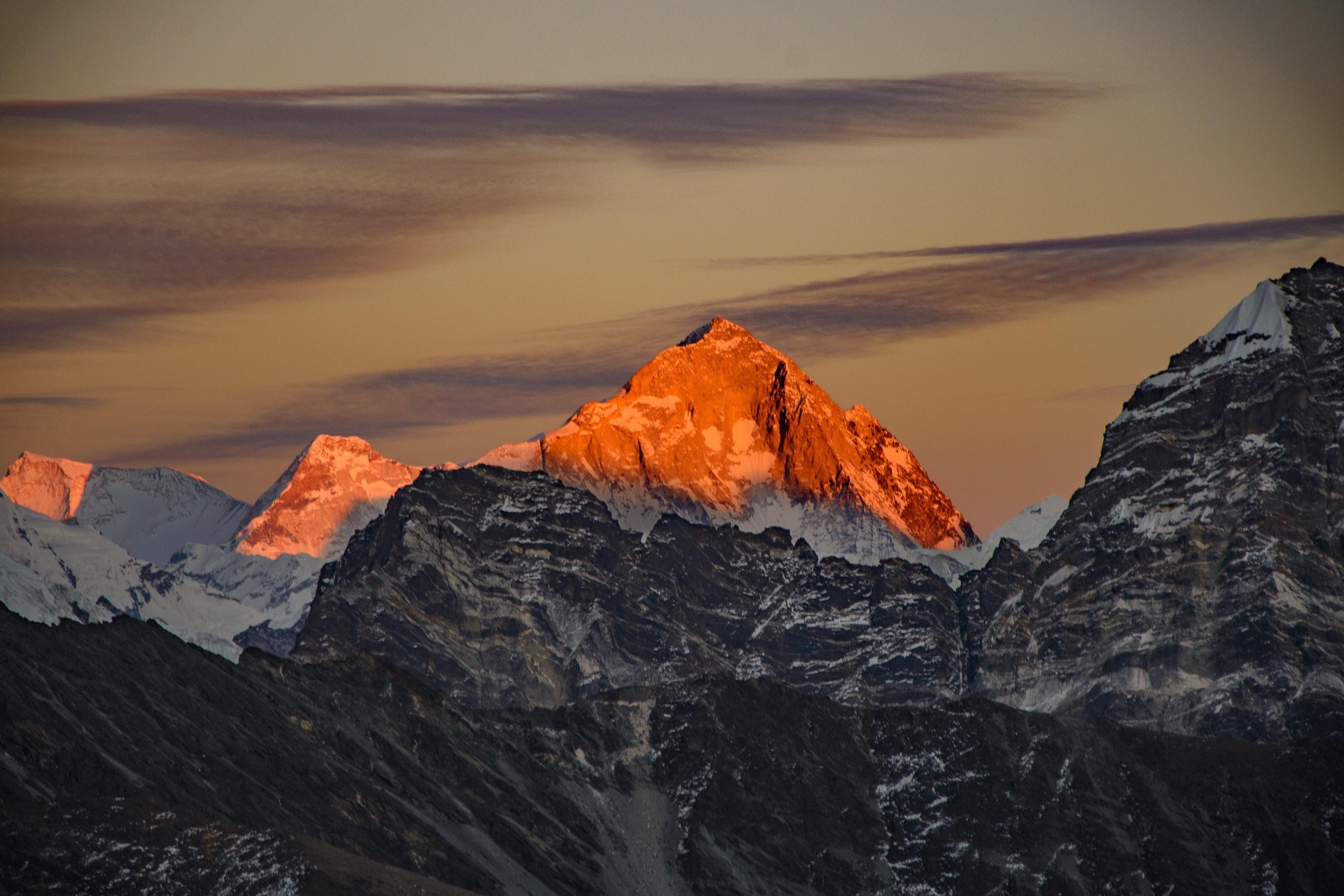
Makalu glowing bright red at sunset, with the rugged Himalayan peaks surrounding the mountain in eastern Nepal.
Location: Eastern Nepal–Tibet border
Makalu is one of the most visually striking mountains in the Himalaya, shaped like a sharp pyramid. It’s also one of the hardest 8,000-meter peaks to climb due to steep ridges and technical sections.
The Makalu Base Camp Trek is challenging and rewards trekkers with dramatic landscapes and minimal crowds.
Why it’s special:
One of the most difficult climbs
Pristine alpine scenery
Less commercial trekking routes
5. Cho Oyu (8,188 m) – The Gentle Eight-Thousander
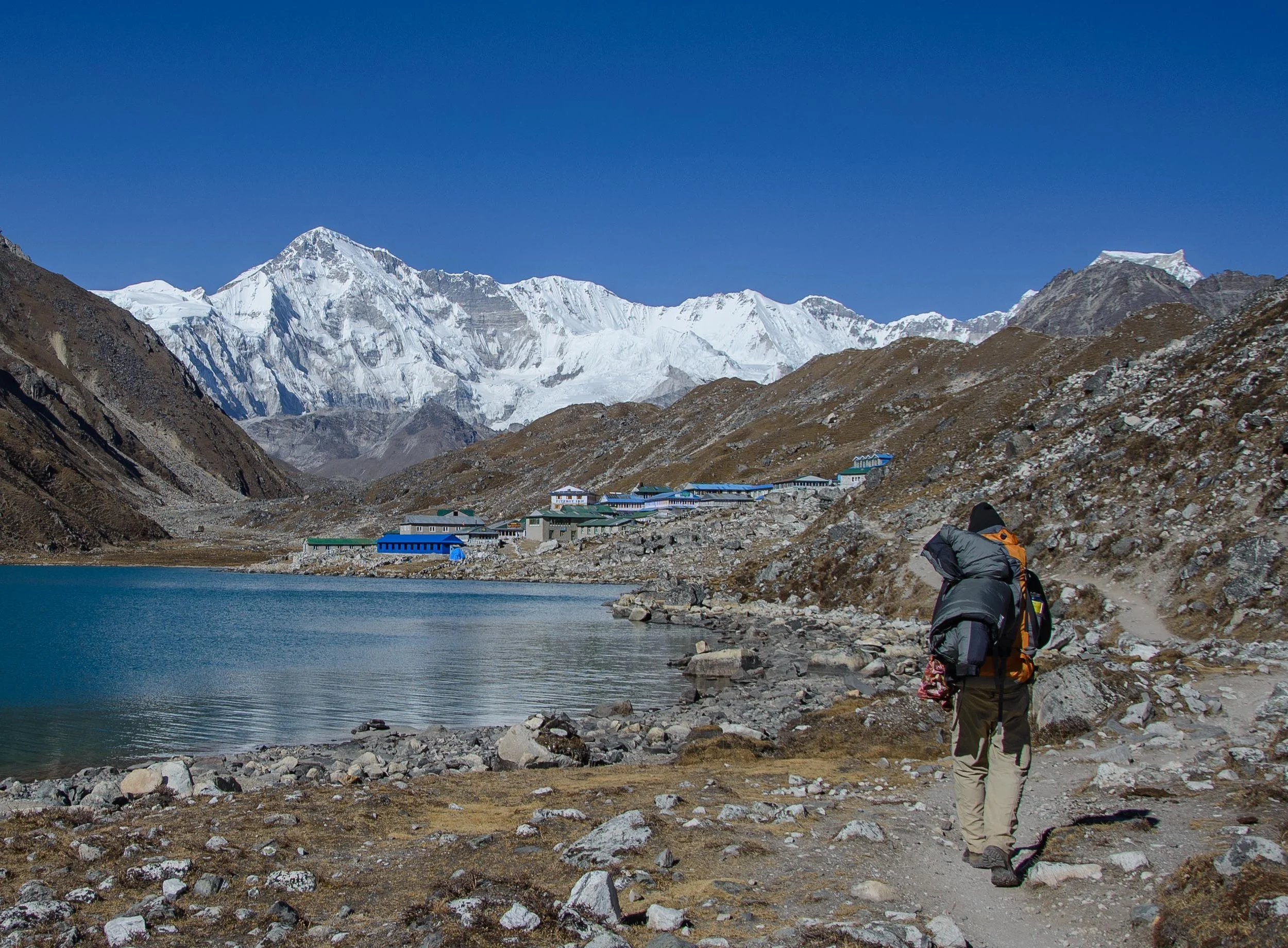
A trekker walking beside Gokyo Lake toward Gokyo village, with the massive Cho Oyu rising in the background.
Location: Nepal–Tibet border
Cho Oyu is considered the most accessible 8,000-meter peak for climbers, often used as a stepping stone to Everest. While climbing permits are issued from Tibet, the mountain is clearly visible from the Gokyo Valley in Nepal.
Trekkers enjoy incredible views of Cho Oyu during the Gokyo Lakes Trek.
Why it’s special:
Popular training peak for climbers
Stunning views from Gokyo Ri
Glacial lakes and wide valleys
6. Dhaulagiri I (8,167 m) – The Wild One
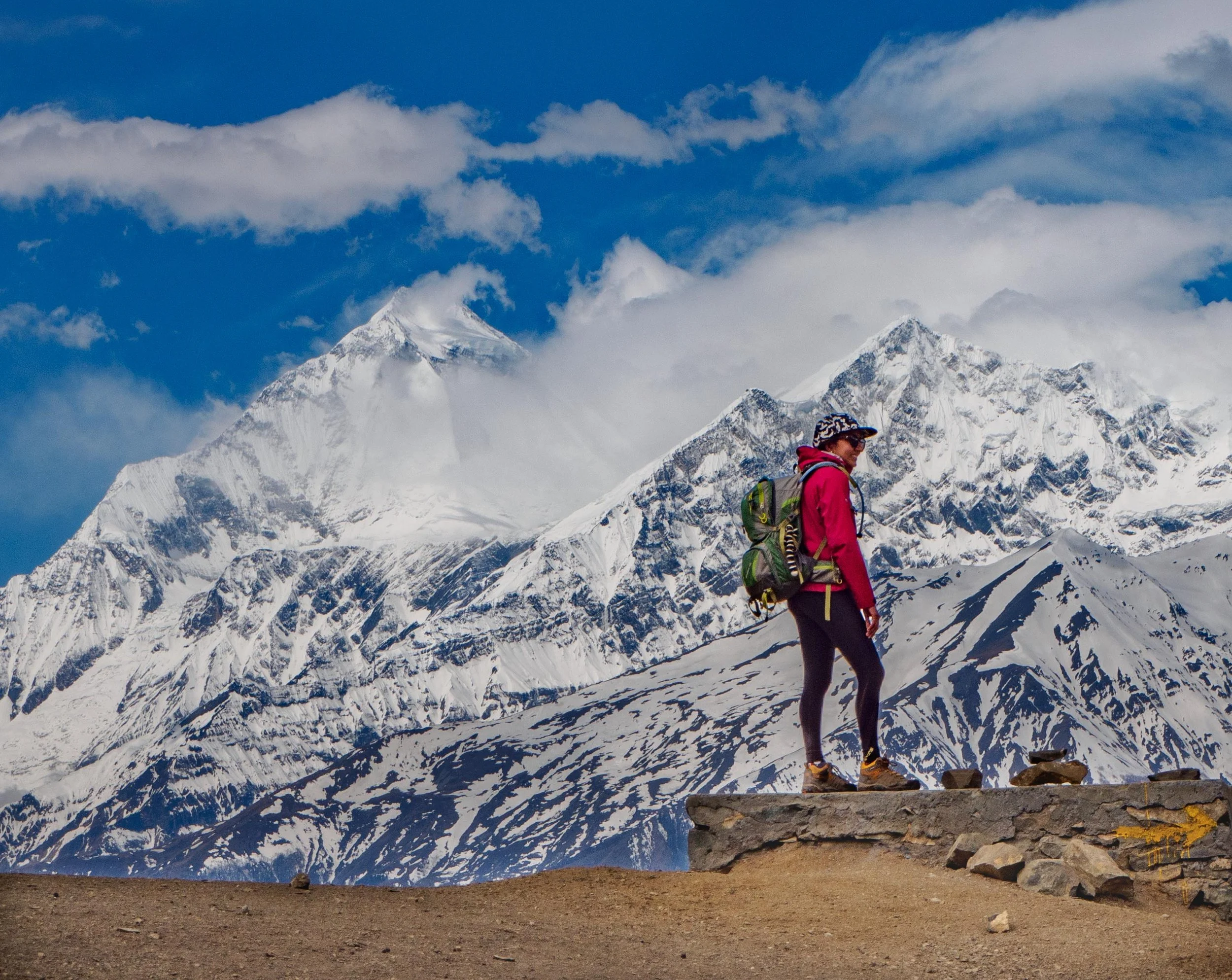
A trekker standing in front of Dhaulagiri with surrounding Himalayan peaks rising in the background.
Location: Western Nepal
Dhaulagiri was once thought to be the highest mountain in the world. Its name means “White Mountain,” and it rises dramatically above deep valleys and glaciers.
The Dhaulagiri Circuit Trek is one of Nepal’s toughest trekking routes, suitable only for experienced trekkers.
Why it’s special:
Massive vertical relief
Extreme weather conditions
Remote and demanding terrain
7. Manaslu (8,163 m) – The Mountain of the Spirit
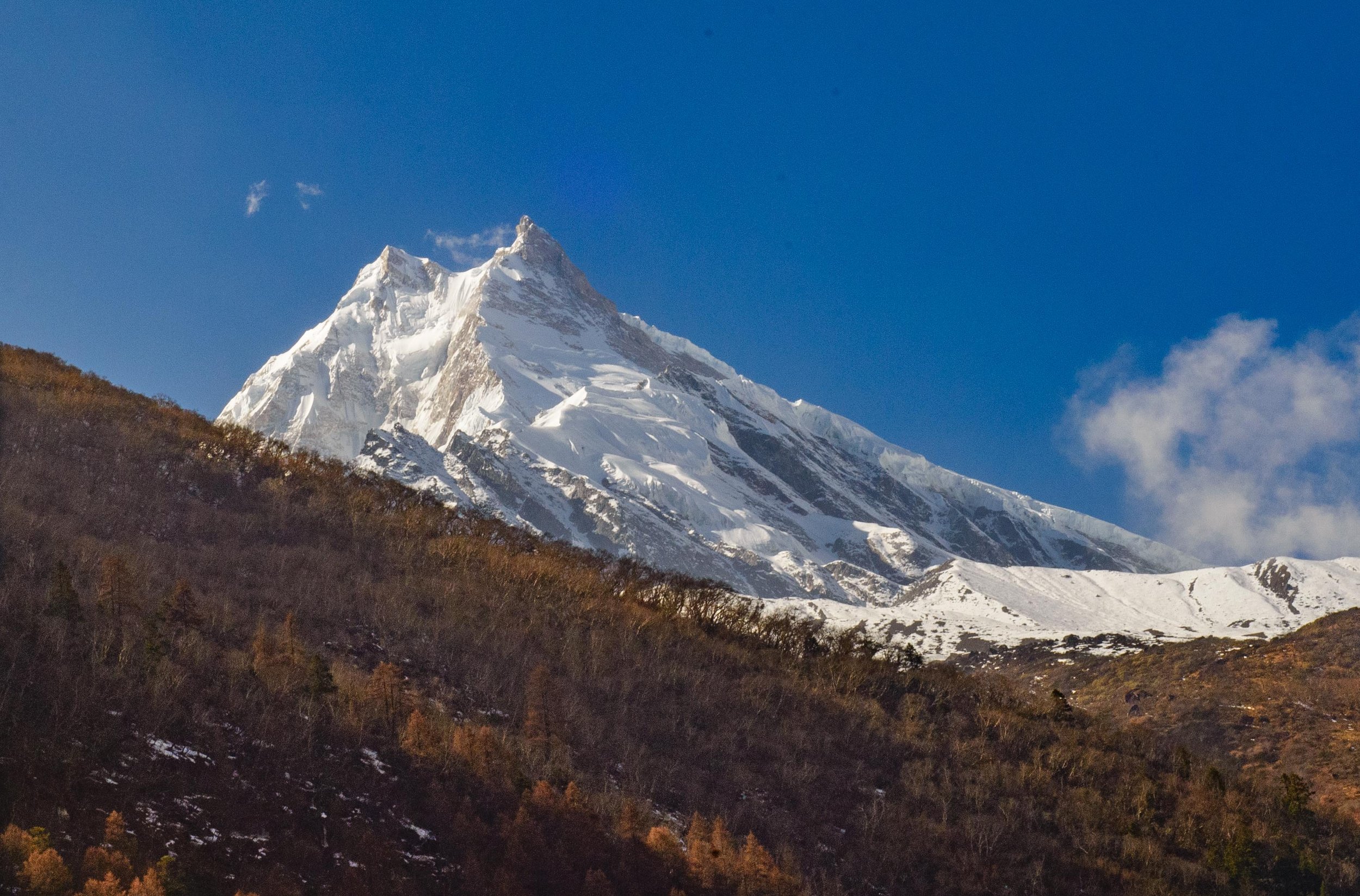
Manaslu rising straight up toward the sky, dominating the surrounding Himalayan landscape in Nepal.
Location: Gorkha region, Nepal
Manaslu, meaning “Mountain of the Spirit,” is the highest peak entirely within Nepal. The Manaslu Circuit Trek has become one of the best alternatives to Annapurna, offering culture, scenery, and fewer crowds.
This region blends Tibetan-influenced villages, high passes, and dramatic Himalayan views. Trek to Tsum Valley and Manaslu Circuit gives you the glimpse of it.
Why it’s special:
Highest peak fully in Nepal
Restricted area with controlled tourism
Incredible cultural immersion
8. Annapurna I (8,091 m) – The Deadliest Giant
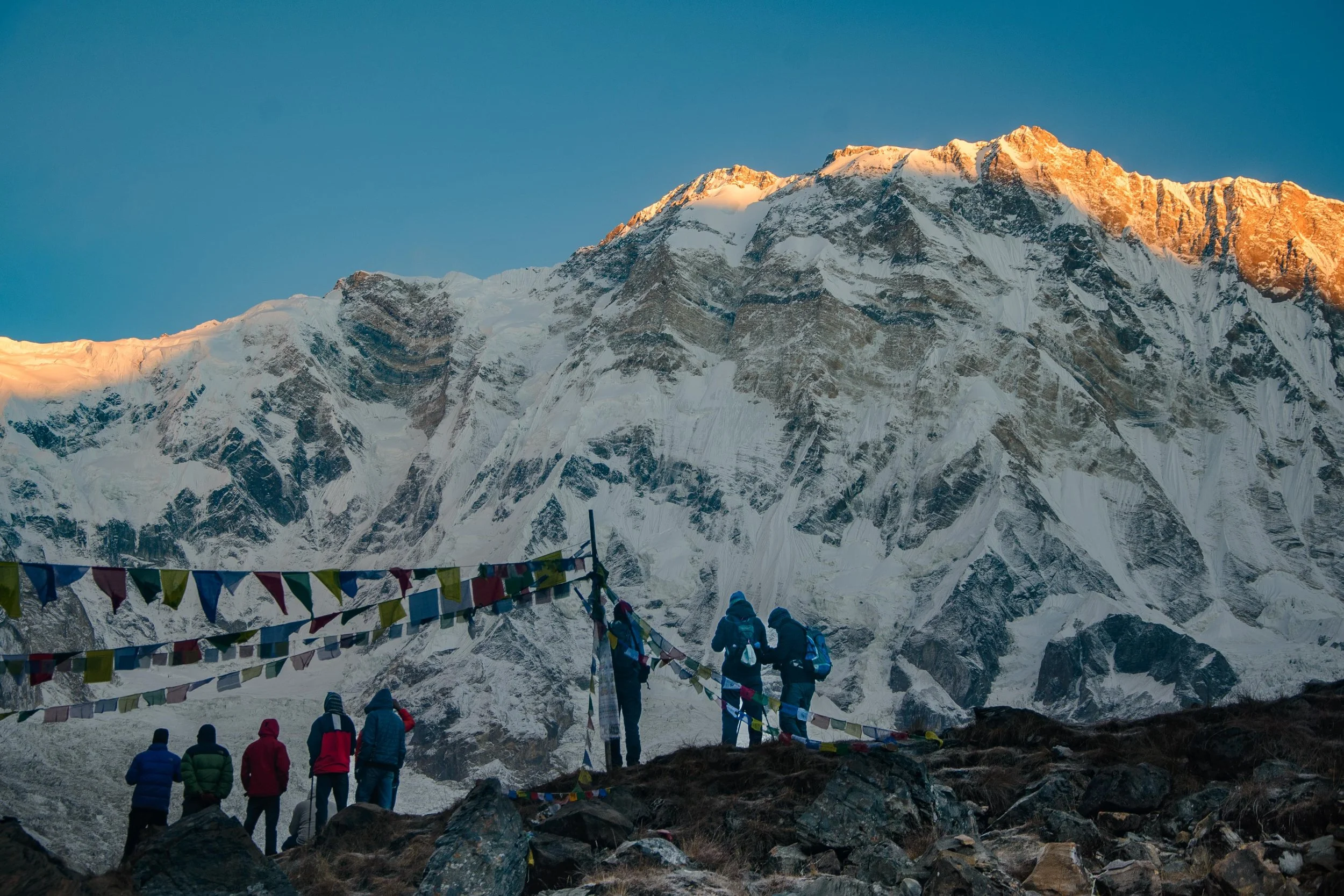
Waiting for the first light to touch Annapurna I, surrounded by prayer flags and quiet anticipation.
Location: Annapurna region, Nepal
Annapurna I is famous for its beauty and its danger. Despite being the 10th highest mountain in the world, it has one of the highest fatality rates among 8,000-meter peaks.
Trekkers don’t climb Annapurna I, but they experience its power on routes like the Annapurna Base Camp Trek and Annapurna Circuit.
Why it’s special:
High avalanche risk
Iconic trekking routes nearby
Incredible biodiversity
Why Nepal’s 8,000-Meter Peaks Matter
These mountains aren’t just statistics on a list. They define Nepal’s identity, shape trekking routes, influence weather patterns, and support mountain communities.
You may never stand on their summits, but walking beneath them is an experience that stays with you for life.
Planning a Trek in the Land of the Giants
At Lost in the Himalaya, we design small-group treks that let you experience these mountains responsibly, safely, and meaningfully. From classic routes like Everest and Annapurna to quieter trails around Manaslu and Kanchenjunga, we focus on genuine experiences, local knowledge, and proper acclimatization.
Mini FAQ: 8,000-Meter Mountains in Nepal
-
Nepal is home to eight of the world’s 14 mountains that rise above 8,000 meters. These include Mount Everest, Manaslu, Annapurna I, Dhaulagiri, Kangchenjunga, Lhotse, Makalu, and Cho Oyu.
-
Mount Everest (8,848.86 m) is the highest mountain in Nepal and the highest point on Earth. It lies in the Khumbu region near the Nepal–Tibet border.
-
Yes. Many of Nepal’s famous trekking routes pass beneath 8,000-meter mountains. Treks like Everest Base Camp, Manaslu Circuit, Annapurna Base Camp, and Gokyo Lakes offer close-up views without technical climbing.
-
Manaslu (8,163 m) is the highest mountain located fully within Nepal’s borders. It is also one of the most culturally rich trekking regions in the country. Also Dhaulagiri (8,167 m) and Annapurna I (8,091 m) are entirely in Nepal.
-
The Everest region offers views of Everest, Lhotse, Cho Oyu, and Makalu, while the Annapurna and Manaslu regionsprovide access to Annapurna I, Dhaulagiri, and Manaslu.
Choosing the best time to trek in Nepal plays a major role in visibility, weather conditions, and overall comfort on the trail.
For travellers who want to experience the Himalaya at a slower, more mindful pace, our yoga and trekking retreats offer a balance of walking, movement, and time to connect with the mountains.
Ready to walk in the shadow of the world’s highest mountains?
👉 Explore our guided treks in Nepal
👉 Talk to us about a custom itinerary
👉 Book your Himalayan adventure with Lost in the Himalaya
Visit: www.lostinthehimalaya.com.au
Find yourself in the mountains.
