
Kathmandu is not just a stopover before the mountains. It’s a living, breathing city where ancient traditions meet everyday life. Prayer flags flutter above traffic, temple bells ring between narrow alleyways, and every corner tells a story that’s hundreds of years old.
Whether you’re here for a few days before a trek or taking time to explore properly, Kathmandu has a way of grounding you before the journey ahead.
Here are some of the best things to do in Kathmandu, especially if you’re travelling with trekking plans in mind.
1. Wander Through Kathmandu Durbar Square
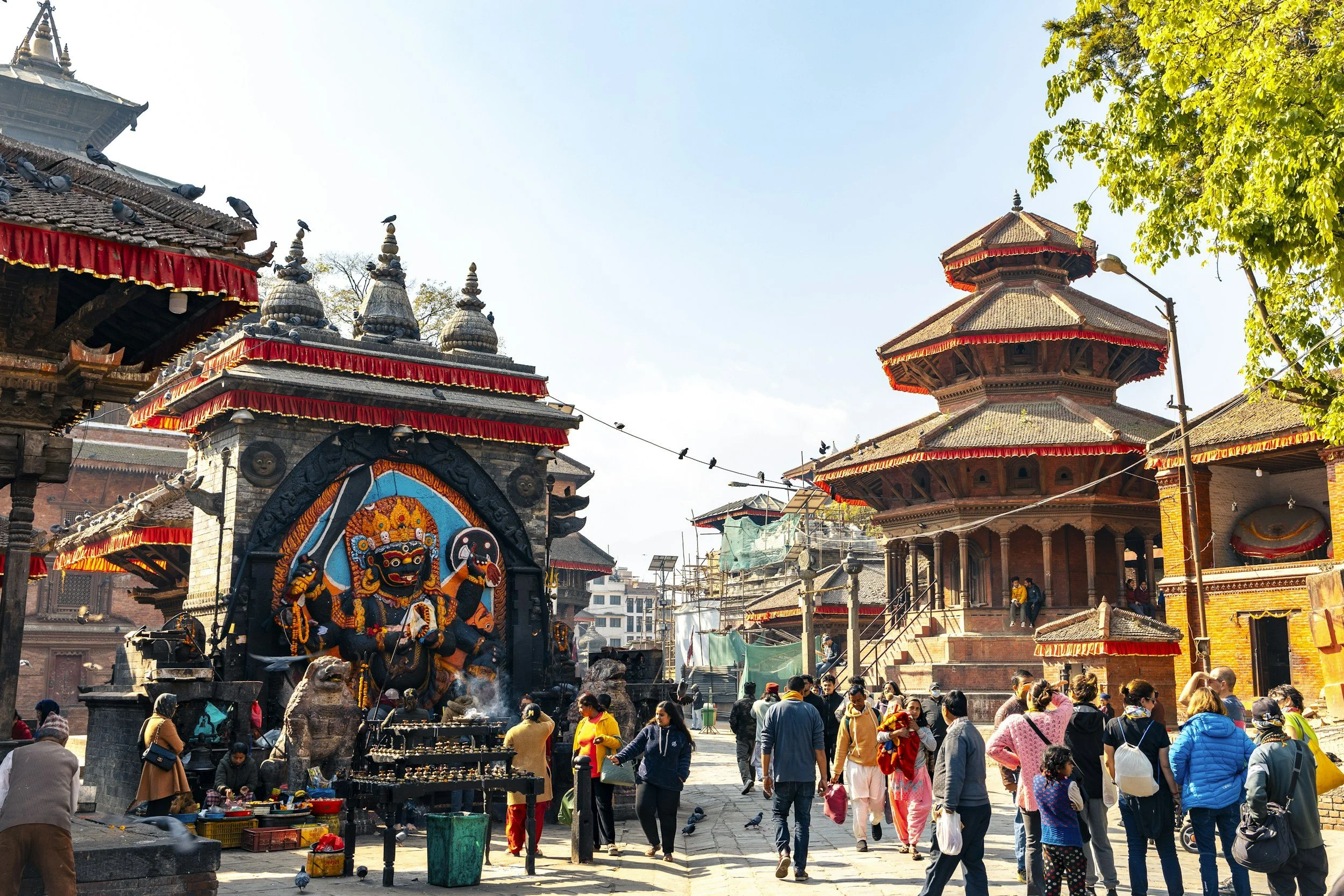
Ancient temples and palace courtyards at Kathmandu Durbar Square, a UNESCO World Heritage Site in Nepal.
Kathmandu Durbar Square is the historic heart of the city. Once the royal palace complex, it’s now a UNESCO World Heritage Site filled with temples, courtyards, and carved wooden windows.
Take your time here. Sit on the steps, watch local life unfold, and notice how history blends into the present. You’ll often see locals praying, guides telling stories, and craftsmen working nearby.
It’s a powerful reminder that Nepal’s culture isn’t staged. It’s lived.
2. Visit Swayambhunath (Monkey Temple)
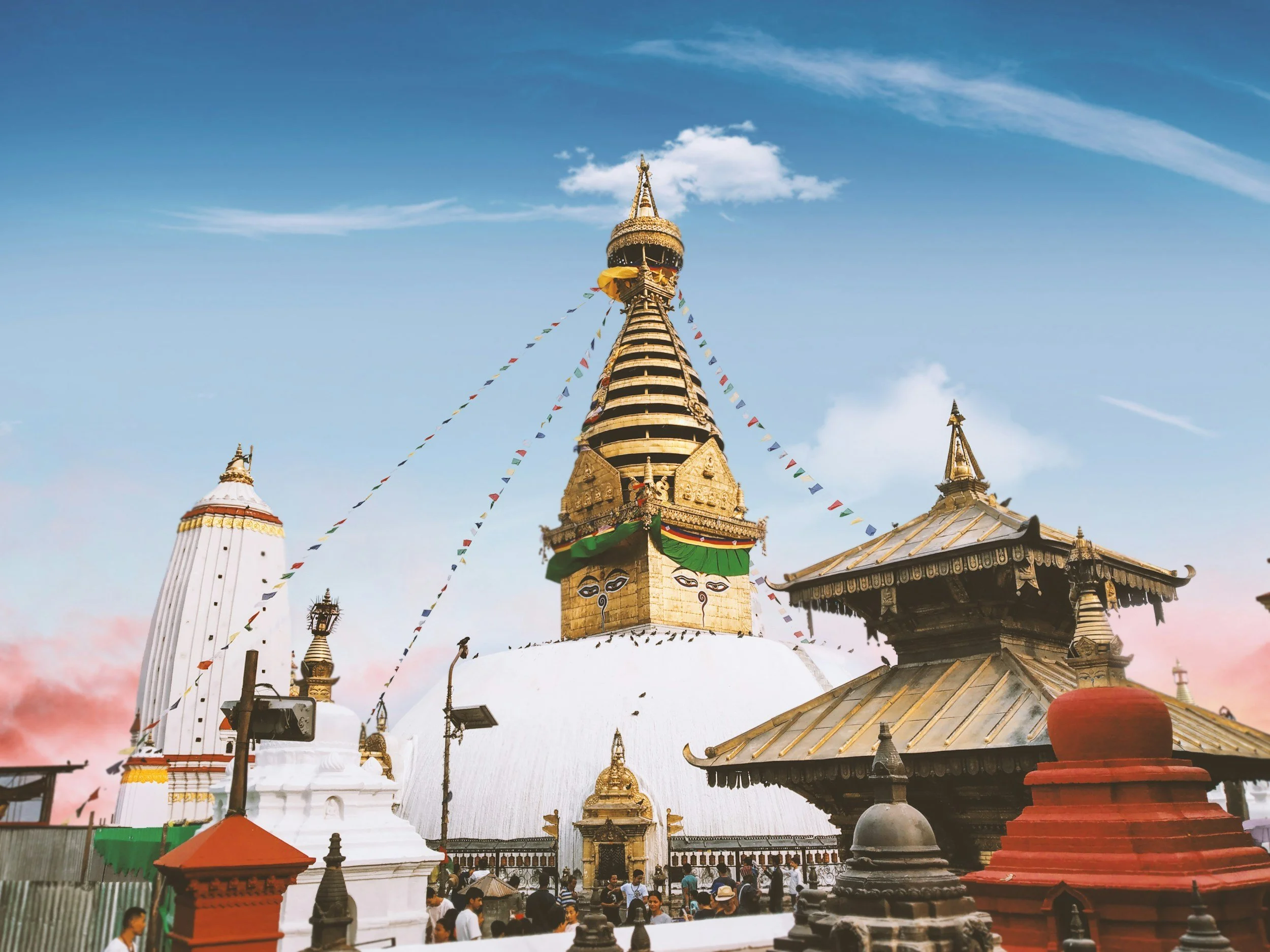
Swayambhunath Stupa, also known as the Monkey Temple, in Kathmandu.
Perched on a hill overlooking the Kathmandu Valley, Swayambhunath is one of the city’s most iconic landmarks.
Climb the steps slowly, take breaks, and let the view open up as you reach the top. The stupa itself is deeply spiritual, with prayer wheels, incense, and monks moving quietly around it.
This is a great place to pause, breathe, and mentally shift gears before heading into the mountains.
3. Experience the Energy of Boudhanath Stupa
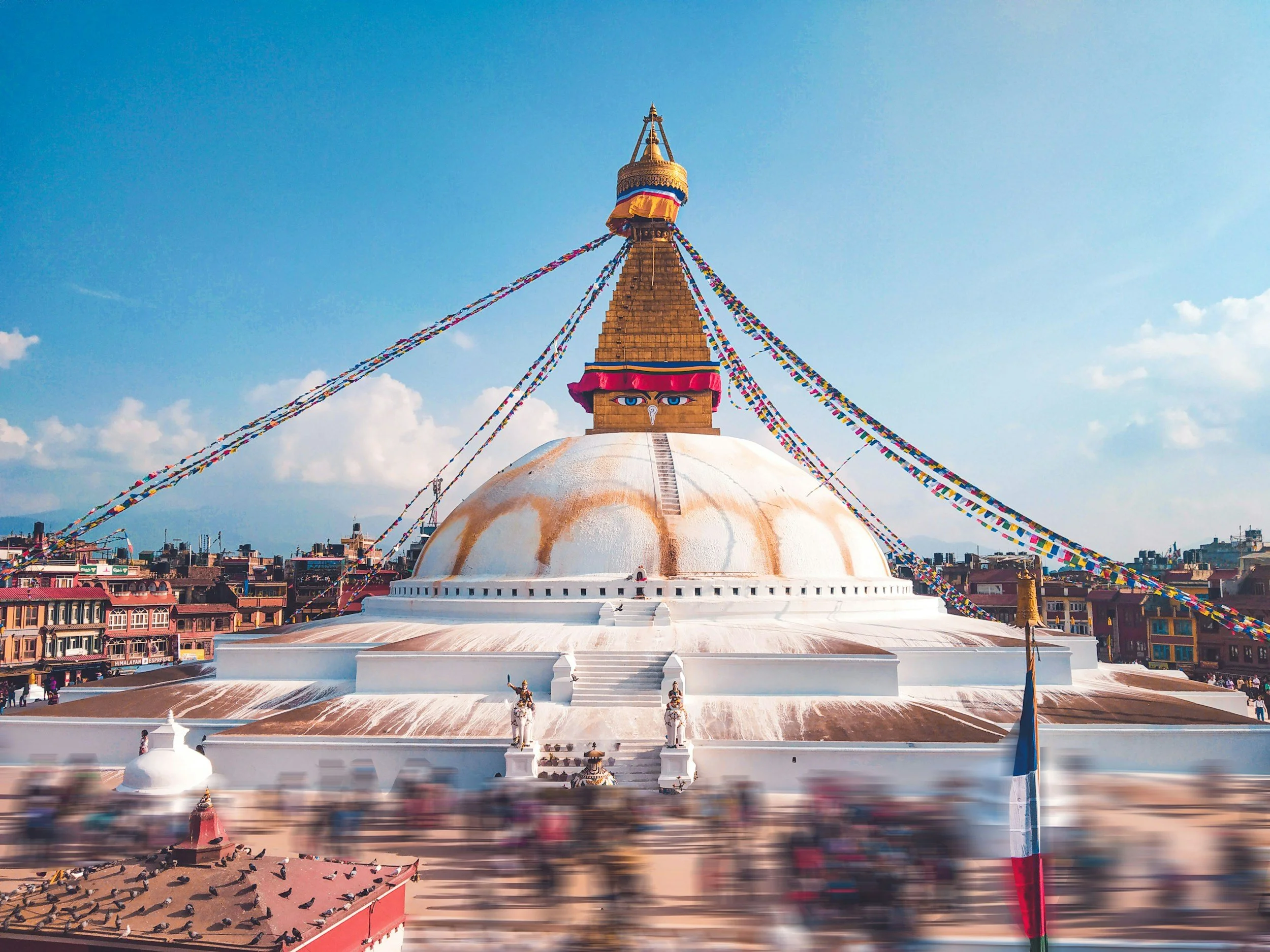
The white dome and Eyes of Buddha at Bouddhanath Stupa, surrounded by prayer flags and worshippers.
Boudhanath is one of the largest Buddhist stupas in the world and a spiritual centre for Tibetan Buddhism.
Walk clockwise around the stupa, spin prayer wheels, and soak in the calm rhythm of the place. Cafés and rooftops around the stupa make it easy to sit with a tea and watch daily life pass by.
Many trekkers find this place grounding before heading to high altitude regions like the Everest Base Camp trek or the quieter Gokyo Lake trek, where Buddhist culture remains deeply woven into mountain life.
4. Explore Patan (Lalitpur)
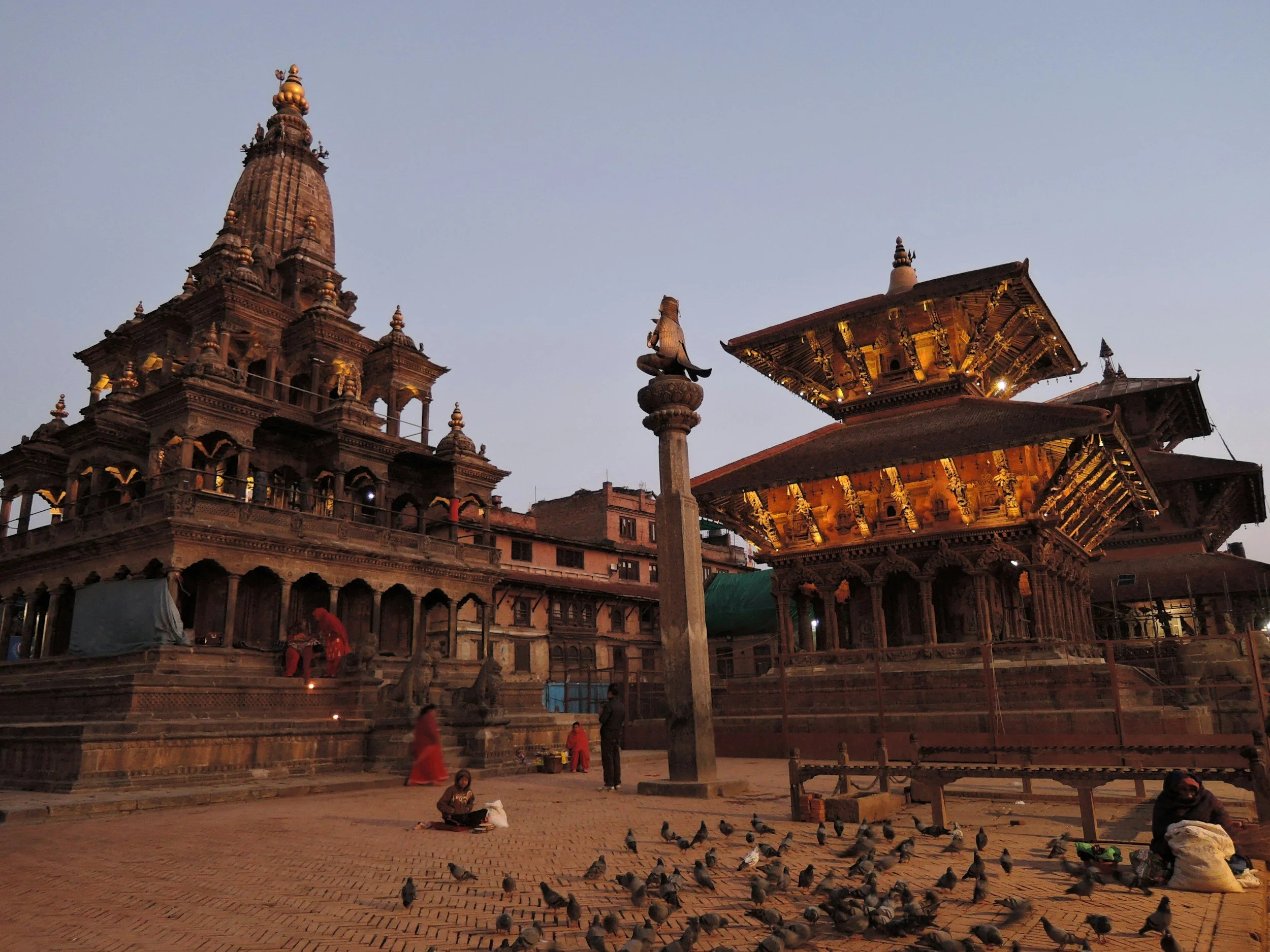
Warm evening light illuminating the temples and traditional Newari architecture of Patan Durbar Square.
Just across the Bagmati River, Patan feels calmer and more refined than central Kathmandu.
Patan Durbar Square is packed with temples, museums, and artisan workshops. It’s also one of the best places to understand Newari culture and traditional craftsmanship.
If you enjoy history, architecture, and slow exploration, Patan is worth at least half a day.
5. Get Lost in Thamel (In a Good Way)
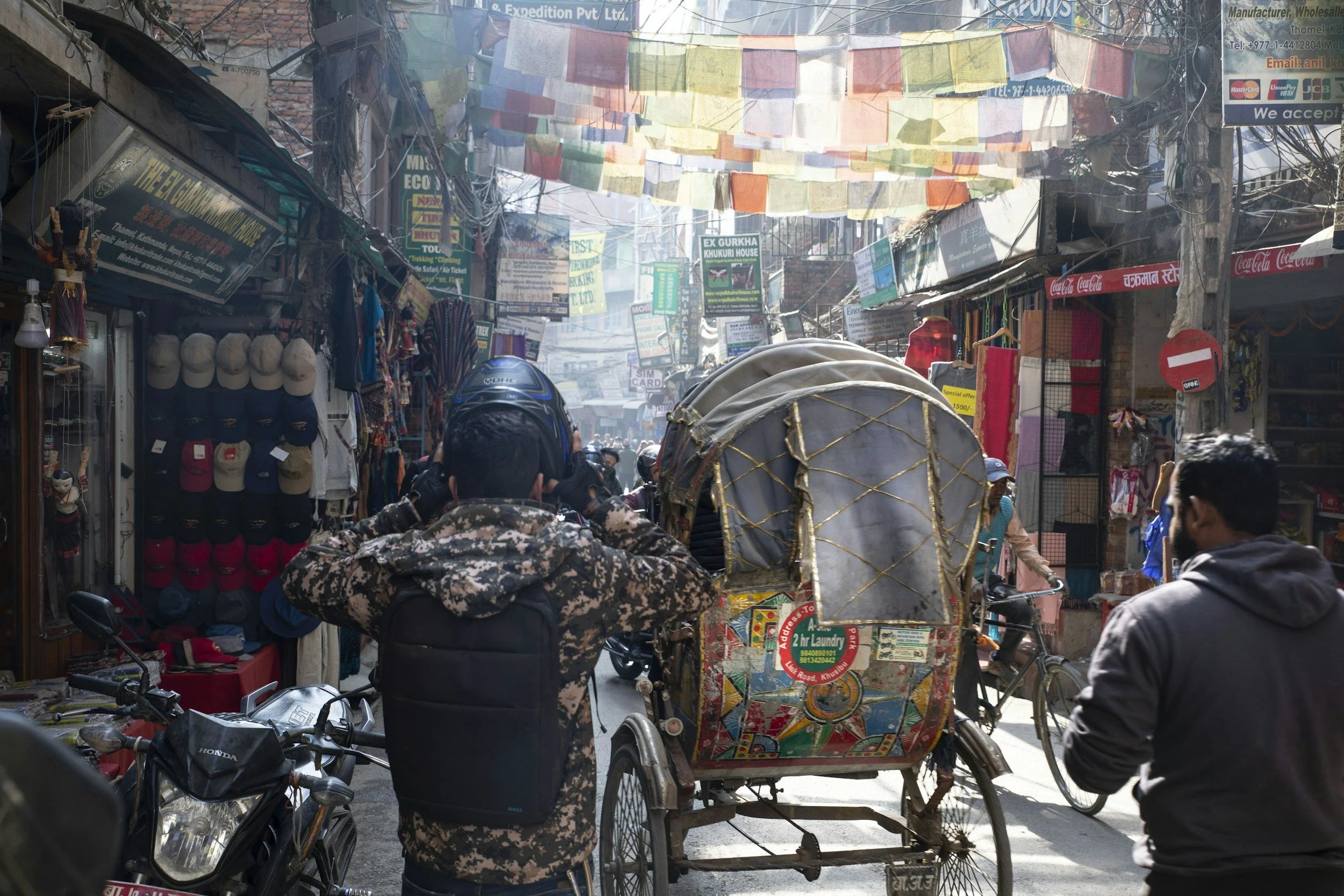
A rickshaw moving through the busy streets of Thamel, with prayer flags overhead and shops, locals, and tourists wondering the street.
Thamel is Kathmandu’s most famous neighbourhood, and yes, it’s busy. But it’s also practical and full of character.
This is where you’ll find trekking shops, cafés, bookshops, gear stores, and restaurants from all over the world. It’s also where many travellers meet, swap stories, and prepare for upcoming adventures.
If you’re heading into the Annapurna region or beyond, this is a convenient place to do last-minute checks before starting treks like the Annapurna Base Camp trek or the more remote Manaslu Circuit trek.
6. Try Local Food Beyond the Tourist Menu
Kathmandu is the best place to get familiar with Nepali food before heading into the mountains. Meals here are more varied, richer, and deeply tied to local culture.
Momos
Momos are Nepal’s most loved comfort food. These steamed or fried dumplings are usually filled with buffalo, chicken, or vegetables and served with a spicy tomato-based achar. You’ll find them everywhere, from street stalls to family-run restaurants. Simple, filling, and perfect after a long day of walking.

Different types of Nepali momos served on a plate, including steamed, fried, and pan-fried dumplings.
Dal Bhat
Dal bhat is the backbone of daily life in Nepal. It’s a wholesome plate of steamed rice, lentil soup, seasonal vegetables, greens, and sometimes meat. What makes dal bhat special isn’t just the food but the ritual. It’s nourishing, balanced, and often comes with free refills. You’ll eat this almost every day while trekking, so Kathmandu is a good place to appreciate it properly first.
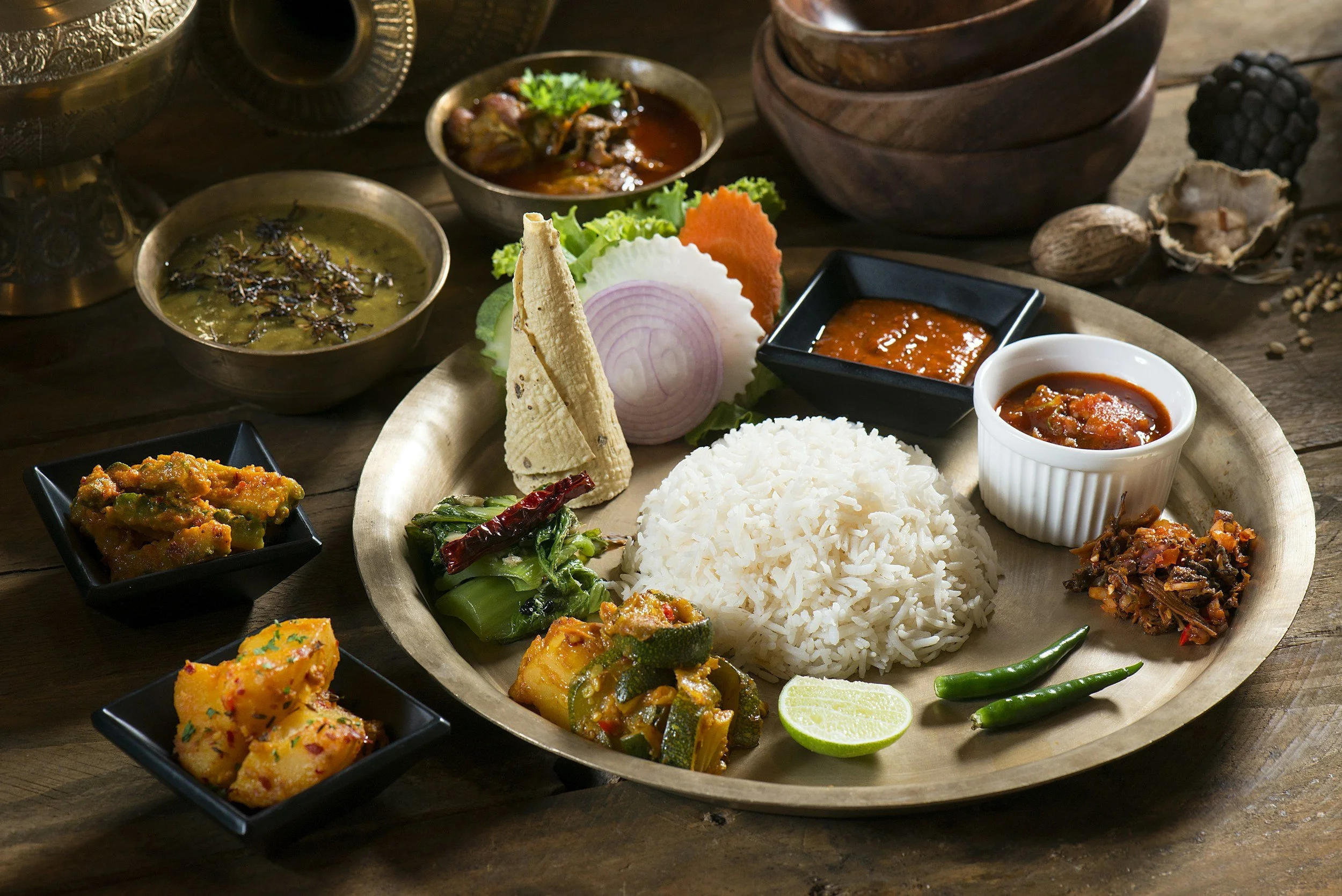
Nepali dal bhat meal being eaten by hand, served with rice, lentils, vegetables, and pickles.
Thukpa
Thukpa is a Tibetan-style noodle soup, especially popular in colder months. It’s warming, lightly spiced, and often packed with vegetables or meat. Many trekkers start gravitating toward thukpa as they head to higher altitudes, making it a great pre-trek favourite.
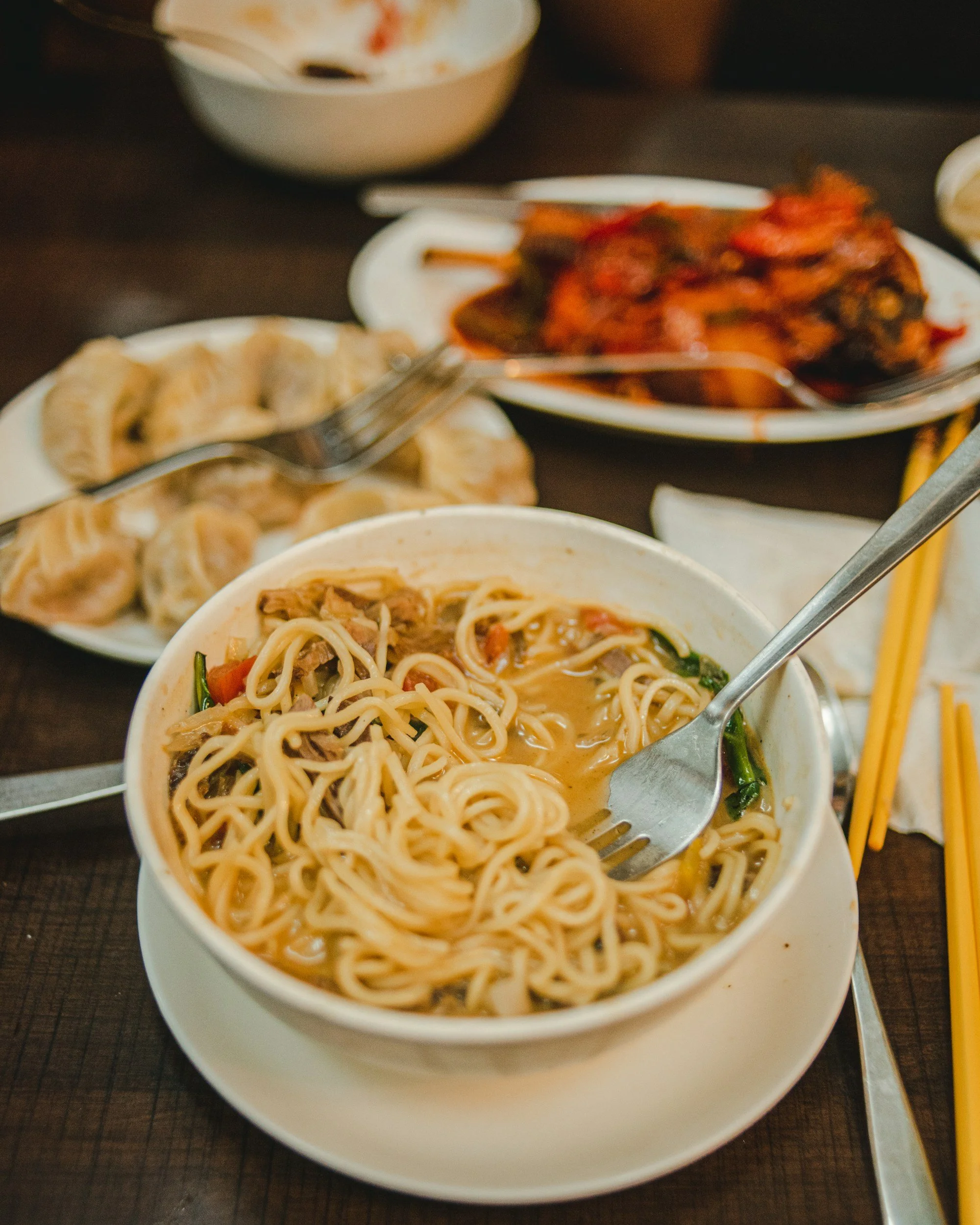
Steaming bowl of thukpa noodle soup with vegetables, broth, and fresh herbs, popular in Nepal.
Newari Cuisine
Newari food comes from the indigenous people of the Kathmandu Valley and has its own distinct flavours. Dishes like bara (lentil pancakes), yomari (sweet steamed dumplings), and choila (spiced grilled meat) are commonly served during festivals and family gatherings. Trying Newari food gives you a deeper understanding of Kathmandu’s roots beyond the tourist layer.
7. Take a Short Cultural Day Trip
If you have an extra day or two in Kathmandu, short trips outside the city add balance to your journey.
Bhaktapur
Bhaktapur feels like stepping back in time. The old town is filled with brick-paved streets, temples, pottery squares, and traditional houses. It’s quieter and more preserved than central Kathmandu, making it ideal for slow wandering and photography. Bhaktapur is one of the best places to see traditional Newari architecture and everyday life.
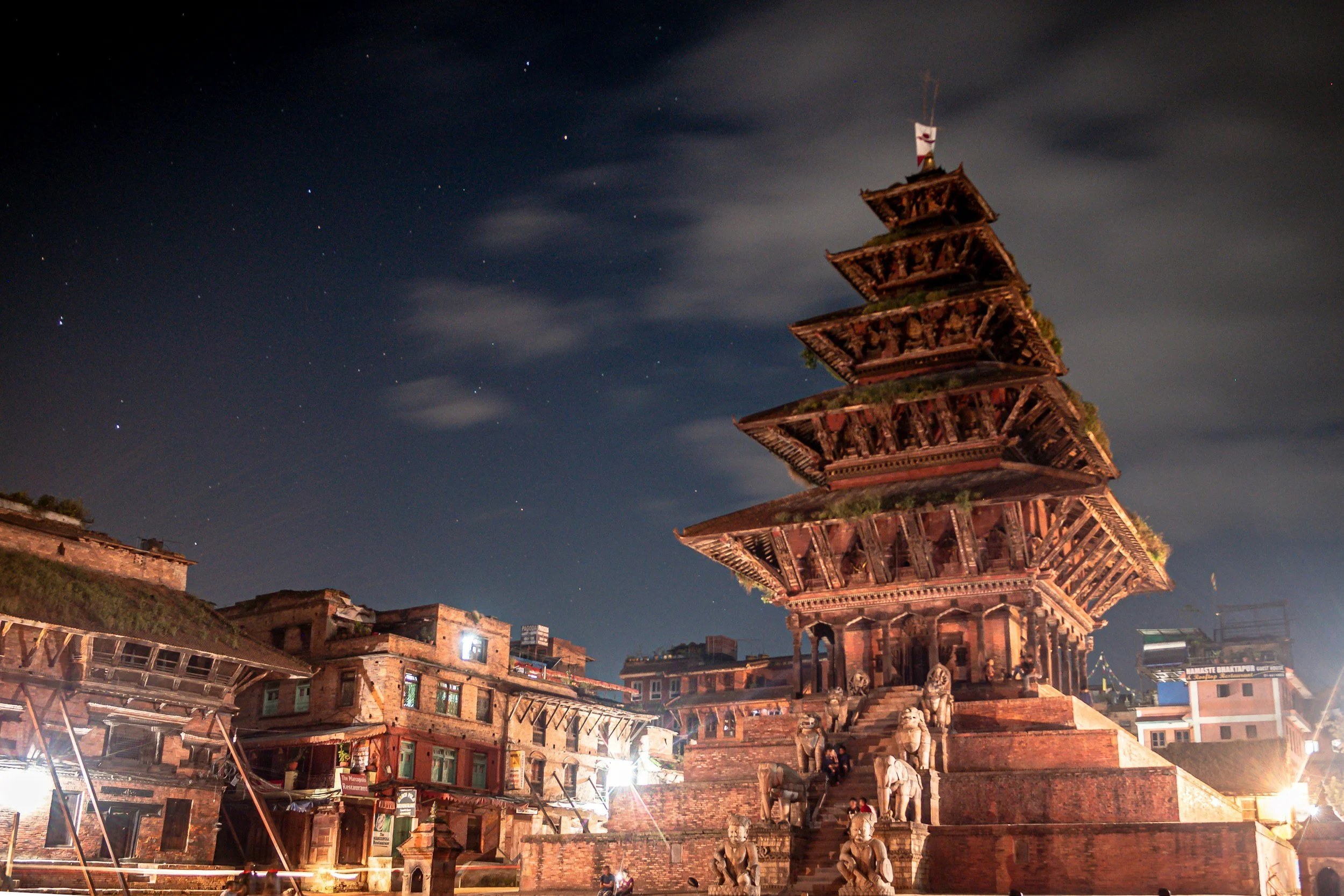
Nyatapola Temple illuminated in the evening at Bhaktapur Durbar Square under a dark blue sky.
Nagarkot
Nagarkot is known for its sunrise and sunset views over the Himalayas on clear days. It’s an easy escape from the city and a great way to stretch your legs with gentle walks. Many travellers visit Nagarkot as a soft introduction to Himalayan scenery before committing to longer treks like the Annapurna or Everest regions.
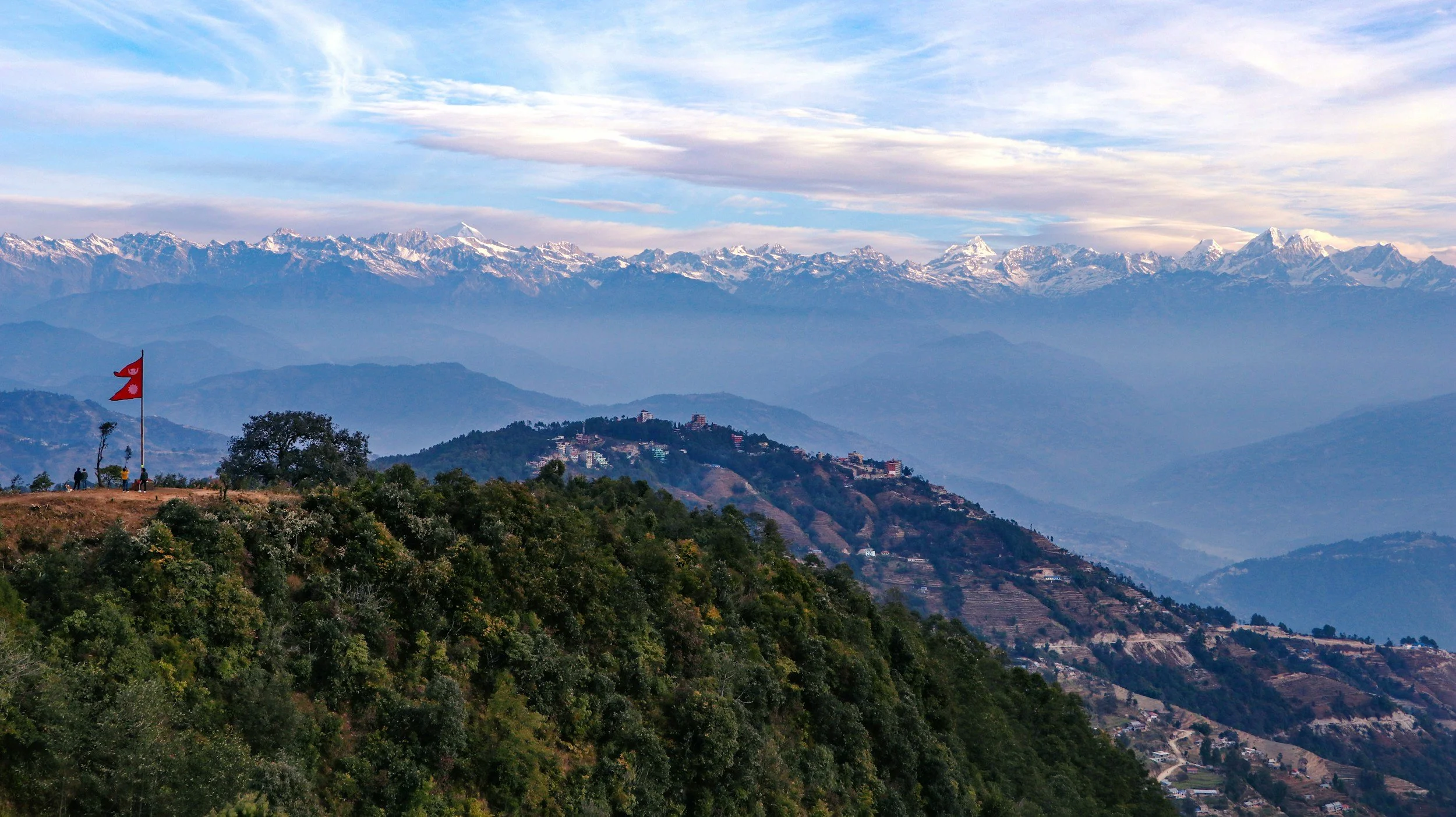
Aerial view from Nagarkot with multiple Himalayan ranges visible in the distance.
Chandragiri Hills
Chandragiri offers sweeping views of the Kathmandu Valley and, on clear days, the Himalayan range. A cable car takes you to the top, making it accessible even if you’re short on time. It’s a good option if you want mountain views without a long drive or hike.
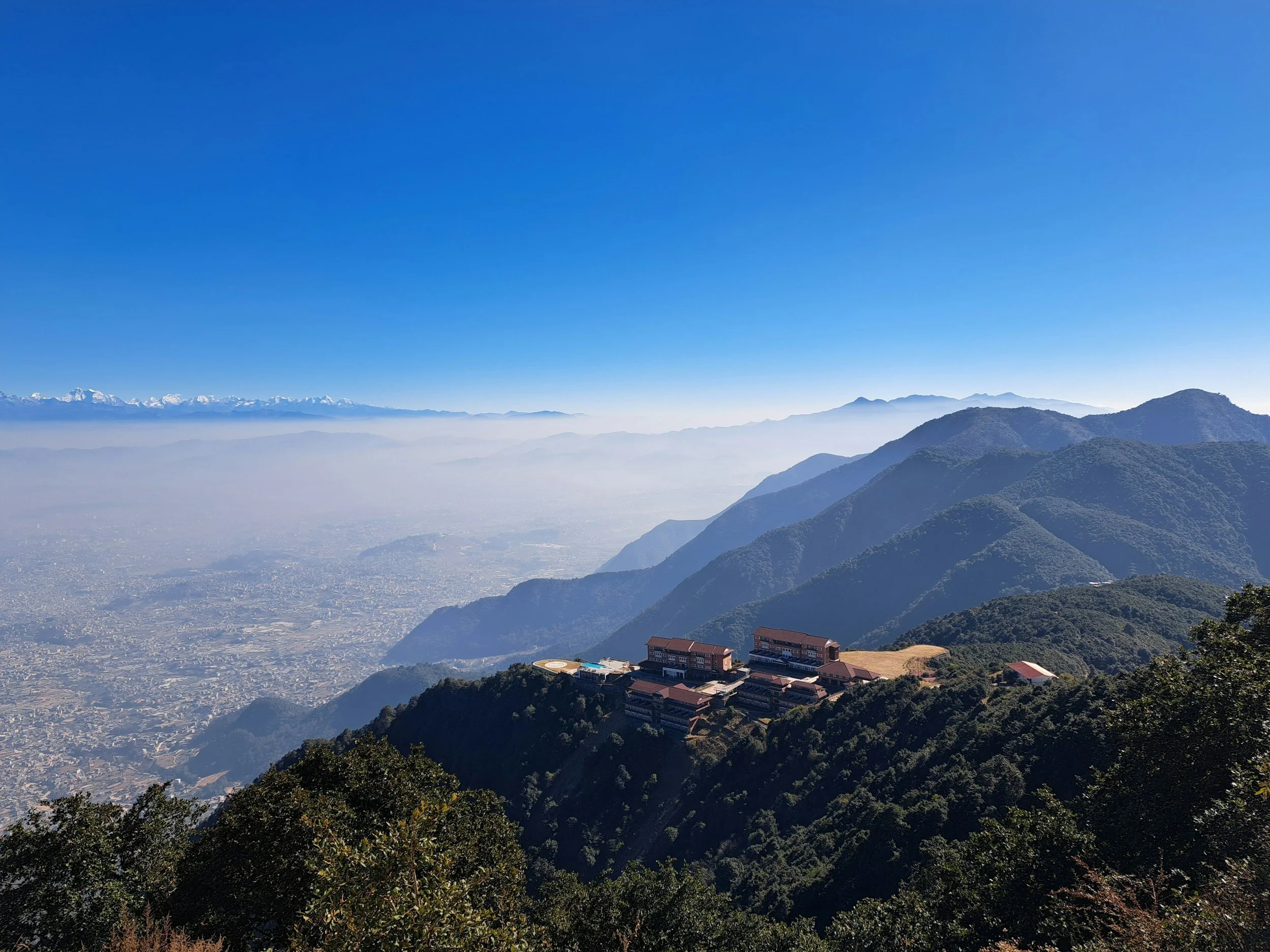
Chandragiri Hills overlooking the Kathmandu Valley, with Himalayan mountain ranges in the distance.
Why Kathmandu Matters Before a Trek
Kathmandu helps you slow down before the trail speeds things up in a different way.
Understanding Nepal’s culture, religions, and rhythms adds depth to treks like Everest Base Camp, Gokyo Lakes, Annapurna Base Camp, or Manaslu Circuit. You’re not just walking through mountains. You’re walking through a country with deep traditions and strong community ties.
That context stays with you long after the trek ends.
Planning Your Nepal Journey
If you’re still deciding where to go after Kathmandu, these guides might help:
Best Time to Trek in Nepal
Each region offers something different, from classic routes to quieter, less-travelled trails.
Lastly…
Kathmandu is not a place to rush through. Even a day or two here can shift your mindset and set the tone for everything that follows.
Walk slowly. Look up. Listen. Let the city prepare you for the mountains.
If you’re planning a guided trek or want help choosing the right route for your experience level, feel free to explore our trekking pages or get in touch. We’re always happy to talk Nepal.
