
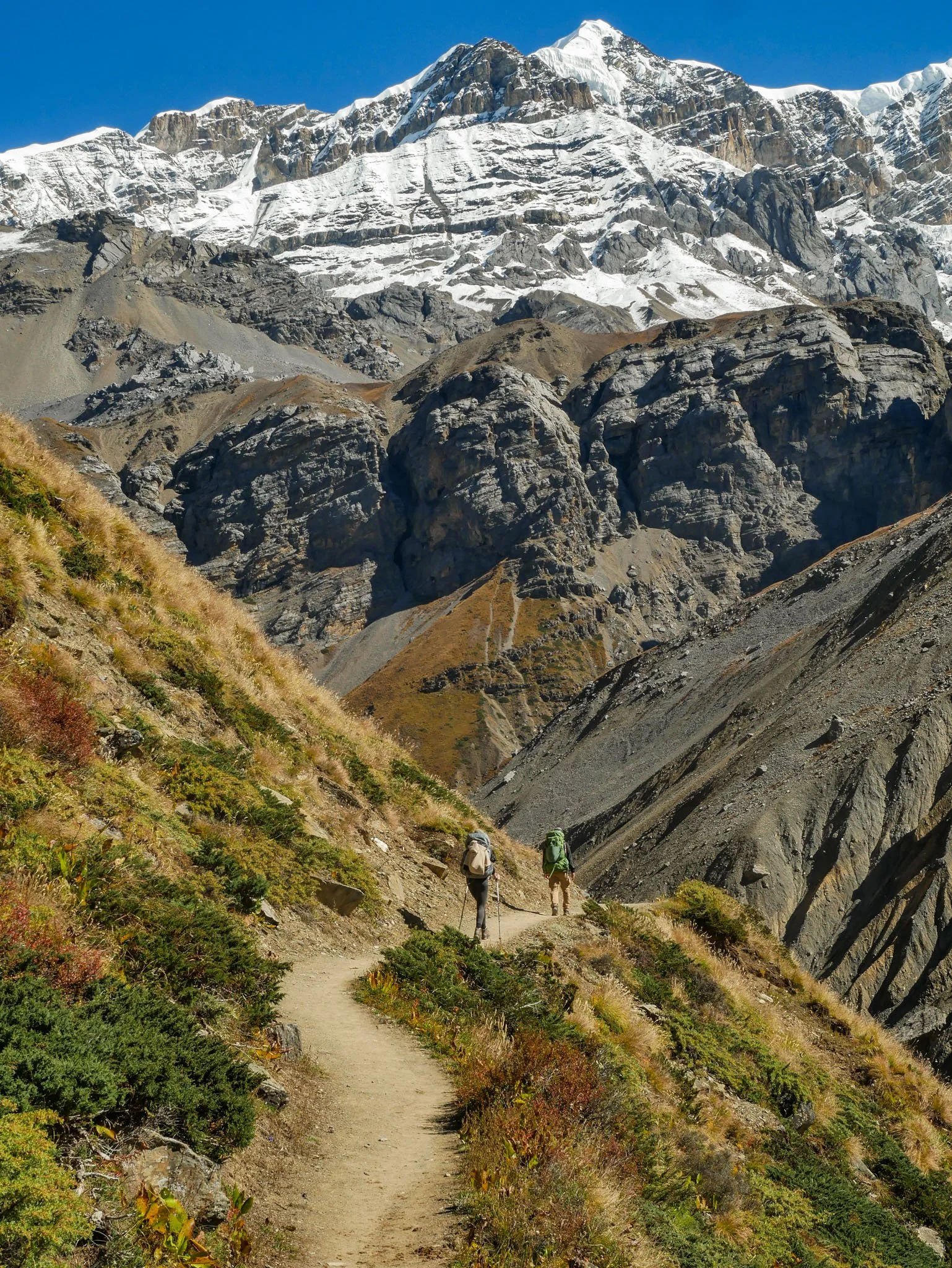
Trekkers walking along a mountain trail beneath towering Himalayan peaks in Nepal
The best time to trek in Nepal depends less on the calendar and more on what kind of experience you want in the mountains.
Nepal can be trekked year-round, but each season changes the feel of the trails. Weather, visibility, crowds, and even village life shift dramatically from month to month. Understanding these seasons helps you choose not just the right time, but the right trek.
Below is a season-by-season guide, with suggested trekking regions and routes you can explore further.
Autumn (September to November): Clear Skies and Classic Himalayan Views
Autumn is widely considered the best time to trek in Nepal. After the monsoon rains, the air is clean, skies are stable, and the mountains stand out in sharp detail.
Daytime temperatures are comfortable at altitude, and trails across the country are fully open. This is the season most trekkers imagine when they picture Nepal.
Best regions and treks in autumn
The Everest region is at its best for the Everest Base Camp trek, with long mountain views and reliable conditions.
The Annapurna region shines for the Annapurna Base Camp trek, combining scenery, culture, and comfortable teahouse stops.
The quieter Manaslu region is ideal for the Manaslu Circuit trek, especially for trekkers looking for a less crowded alternative.
Things to consider
Popular trails are busy
Flights and teahouses book out early
Advance planning matters
If this is your first trek in Nepal, autumn is the safest and most predictable choice.
Spring (March to May): Warm Days and Rhododendron Forests
Spring is the second-best season to trek in Nepal and feels very different from autumn. The days are warmer, forests come alive with rhododendron blooms, and the trails feel more relaxed.
Mountain views are still excellent, especially in the mornings, though afternoon clouds are more common later in the season.
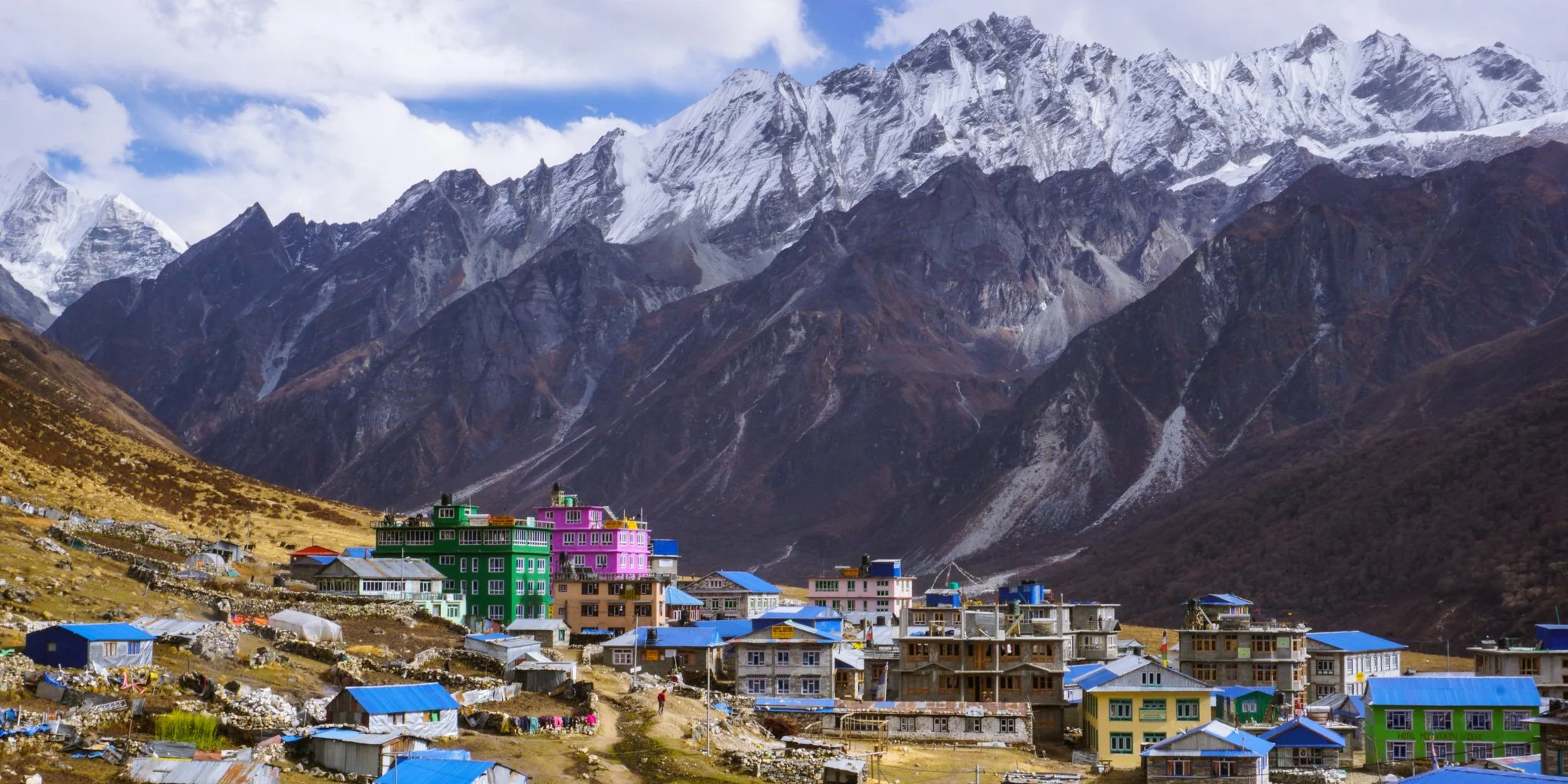
Best regions and treks in spring
The Langtang region is a standout for the Langtang Valley trek, combining alpine scenery with vibrant spring colour.
In the Annapurna region, the Mardi Himal trek is especially rewarding in spring, with forest trails and close-up mountain views.
Classic routes like the Annapurna Base Camp trek and Everest Base Camp trek also work well for trekkers who prefer warmer conditions.
Things to consider
Lower elevations can feel warm by late April
Afternoon cloud build-up is common
Spring suits trekkers who value colour, warmth, and a slightly quieter trail experience.
Winter (December to February): Quiet Trails and Crisp Mountain Air
Winter trekking in Nepal is often overlooked, but it can be a great option if you choose the right routes.
High passes may close due to snow, but many lower and mid-altitude trails remain open, peaceful, and beautifully clear.
Best regions and treks in winter
The lower Annapurna foothills are ideal for short treks and viewpoints like Poon Hill.
Parts of the Langtang region remain accessible, especially at lower elevations.
Short treks focused on scenery rather than high passes work best.
Things to consider
Cold nights above 3,000 metres
Fewer services in remote areas
Shorter daylight hours
Winter is best for trekkers who enjoy solitude and don’t mind layering up.
Monsoon / Summer (June to August): Green Landscapes and Remote Regions
Monsoon season brings heavy rain to much of Nepal, but that doesn’t mean trekking stops altogether. The landscape turns lush and green, villages are vibrant, and popular trails are quiet.
The key is choosing regions that sit in the rain shadow of the Himalayas.
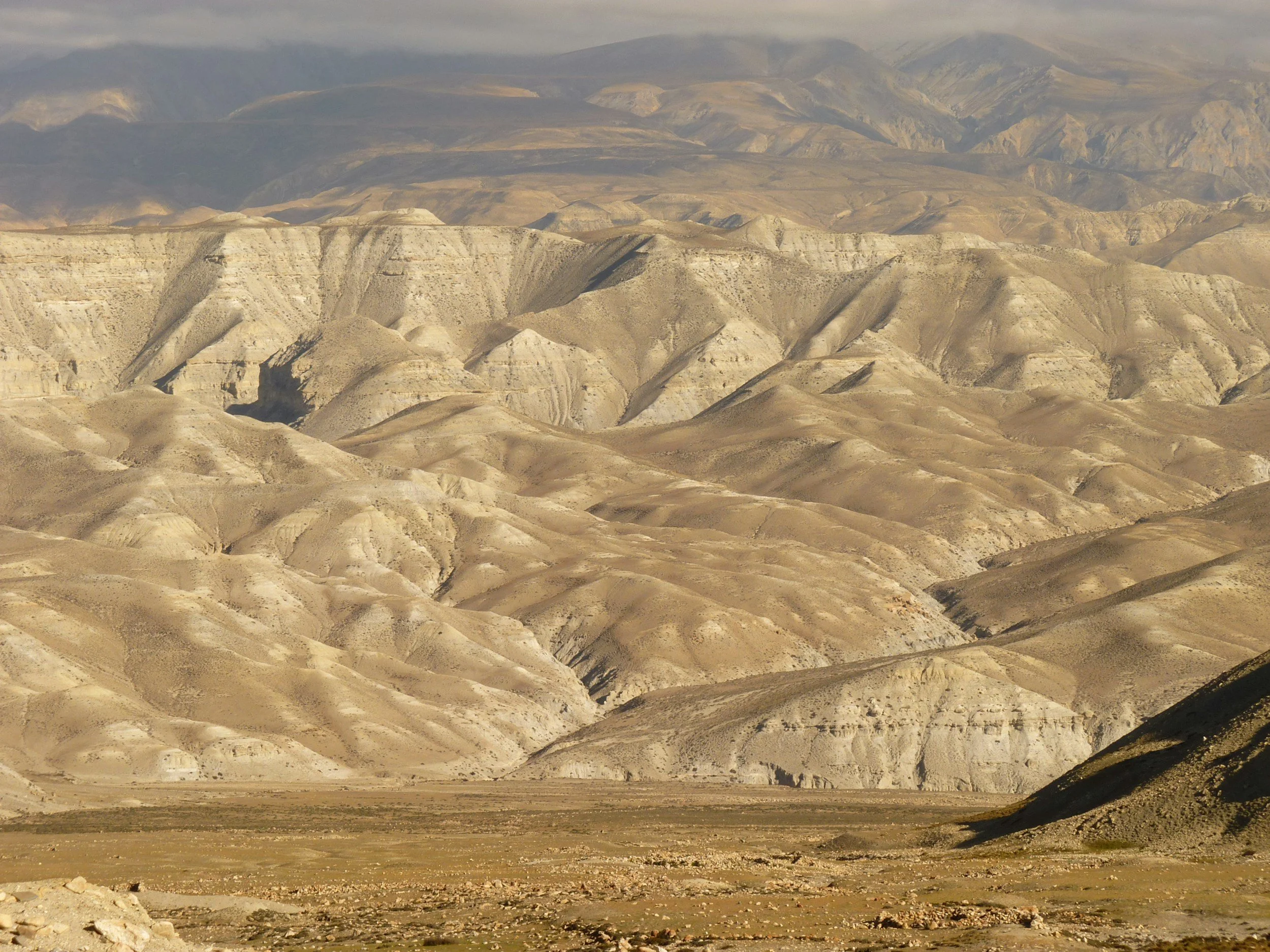
Best regions and treks in monsoon
The Upper Mustang is one of the best summer trekking destinations in Nepal, staying largely dry.
Remote areas like Dolpo offer dramatic landscapes and a true off-the-beaten-path feel.
Things to consider
Leeches and muddy trails in lower regions
Cloud cover limits mountain views
Flights can be weather-dependent
Monsoon trekking suits experienced trekkers or those seeking something different from the classic routes.
So, What’s the Best Time to Trek in Nepal?
There is no single answer, but there is a best time for you.
For clear skies and classic views: October and November
For flowers and warmer days: March and April
For quiet trails: Winter at lower altitudes
For green landscapes and remote regions: Summer in rain-shadow areas
Rather than choosing dates first, it helps to decide which region and trekking style suits your expectations.
If you’re still deciding, reading which trek in Nepal is best or is it safe to trek in Nepal can help you match the right trail to the right season.
Nepal rewards good timing, but more than anything, it rewards those who choose the journey that fits them best.
